
About Oslo
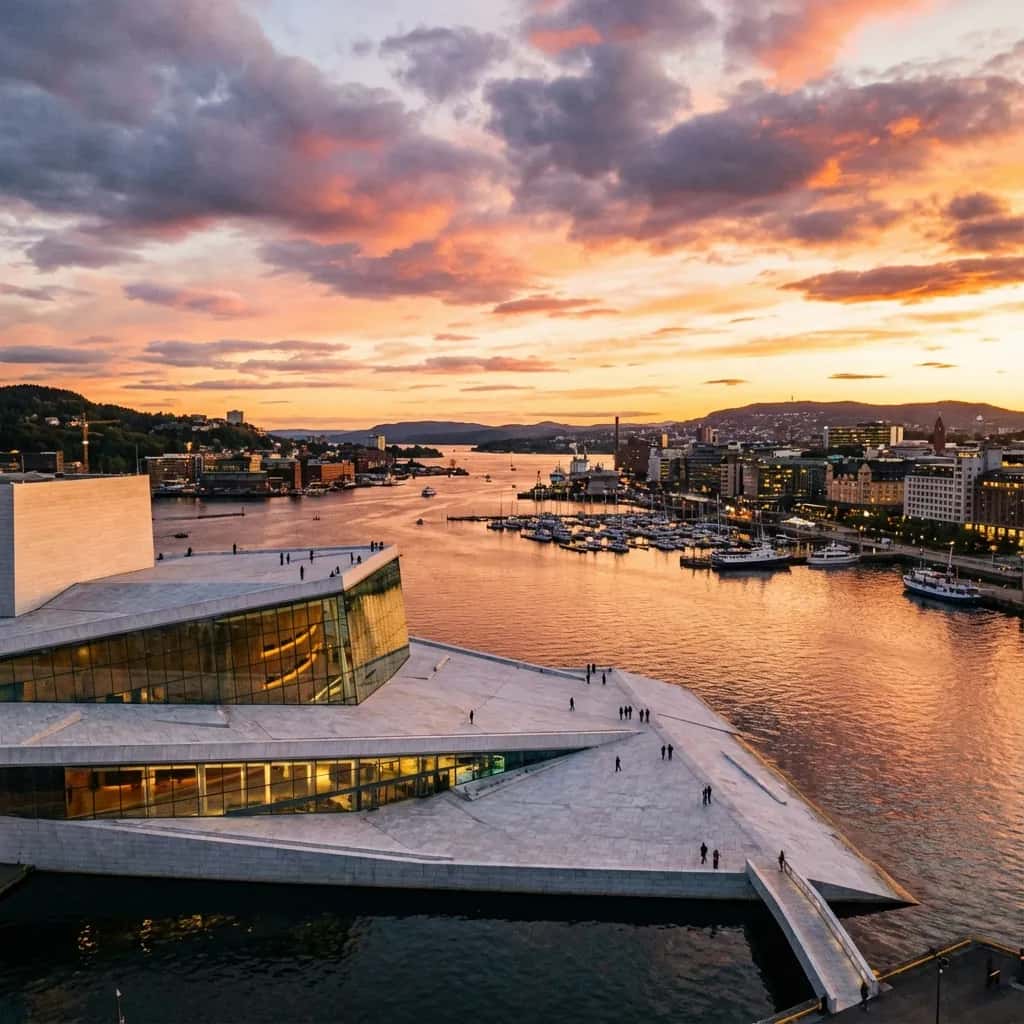
Oslo is Norway's capital and largest city, with 700,000 citizens in the city proper and about 1.5 million inhabitants in greater Oslo. It is in the East of the country in the Oslofjorden fjord, extending over an inlet of the Skagerrak strait. It is spaciously laid out and surrounded by green hills and mountains and includes 40 islands and 343 lakes. Oslo offers ski slopes for alpine skiing and ski trails for cross-country skiing in the winter. In the summer, the temperature in Oslo may make it comfortable to swim. There are several well-visited beach resorts. Oslo is one of the world's northernmost capitals and so gets only 6 hours of sunlight in the winter. In high summer, sunlight hours soar to 18, making its climate markedly different between seasons, with cold yet relatively dry winters. A relatively compact city squeezed into a thin strip of land along the shoreline, Oslo prides itself as one of the world's most sustainable cities. Central parts of the city are compact, but Oslo a
Source: Wikipedia
Essential Information
Currency
Norwegian krone (NOK)
Symbol: kr
Language
Norwegian Nynorsk
Also: Norwegian Bokmål, Sami
Phone Code
+47
International dialing code for Norway
Driving
Drive on the right
Standard for Norway
Region
Europe
Northern Europe
Connectivity
Most of Oslo is covered by 5G. Most of the hotels, cafes and pubs offer free Wi-Fi.
How to Get to Oslo
Transportation options and arrival information
Oslo is served by two airports:Oslo Airport, Gardermoen, Sandefjord Airport Torp. Oslo Airport is the largest of the two and is the main international gateway to Norway.
Getting Around Oslo
Local transportation and navigation tips
There is a comprehensivepublic transport systemin Oslo, consisting of buses, trams, local trains, metro (T-bane) and boats. The public transport is planned and coordinated byRuter[dead link]. The five metro lines have numbers 1 through 5, the six tram lines have numbers 11 through 19, buses have labels from 20, while boats (ferries) are B1, B2 and so forth. Local trains operated by Vy are covered by Ruter ticket system. The local public transport of Oslo also covers the suburbs in Akershus, nota
Safety in Oslo
Very High Safety (Global Peace Index: 1.465)
About the Global Peace Index: Global Peace Index measures peacefulness on a scale of 1 (most peaceful) to 5 (least peaceful)
Oslo is generally a safe city, but as in any metropolitan area, some caution is warranted. Violent crime is rare, but not unheard of. Avoid getting in to quarrels in taxi queues after closing hours of bars. Avoid groups of drunk young men. The police advise that the area along the Akerselva river from Grønland to Cuba is best avoided after dark. It is known for instances of rape, muggings and drug dealing. Though Oslo isn't as dangerous as many places around the world, there are a few working-cl
Where to Stay in Oslo
Accommodation tips and recommendations
There are several hotels, hostels in Oslo. Normally it is okay to find a room, but can be difficult when it is peak time during conferences, concerts, sports events etc. There are also a few youth hostels to stay at or you can consider staying with the locals viaAirbnb. Affordable/budget accommodation is available outside the inner city center (Sentrum) but upscale hotels in the city centre can also be reasonably affordable during off-peak times of the year such as the summer.
Things to See in Oslo
20 landmarks and points of interest
Baitun Nasr Mosque
mosque in Oslo, Norway
Bankplassen
street in Oslo, Norway
Bislett Stadion
stadium at Oslo, Norway
Ellingsrud Church
church in Oslo, Norway
Fossum Church
church in Oslo, Norway
Furuset Church
church in Oslo, Norway
Furuset aktivitetspark
park in Oslo municipality, Norway
Furuset kulturpark
park
Grorud Church
church in Oslo, Norway
Grønlands torg
square in Oslo, Norway
Hasle Church
church in Oslo, Norway
Høybråten Church
church in Oslo, Norway
Source: Wikidata
Ready to Explore Oslo?
Find the perfect time to visit and discover all that Oslo has to offer.