
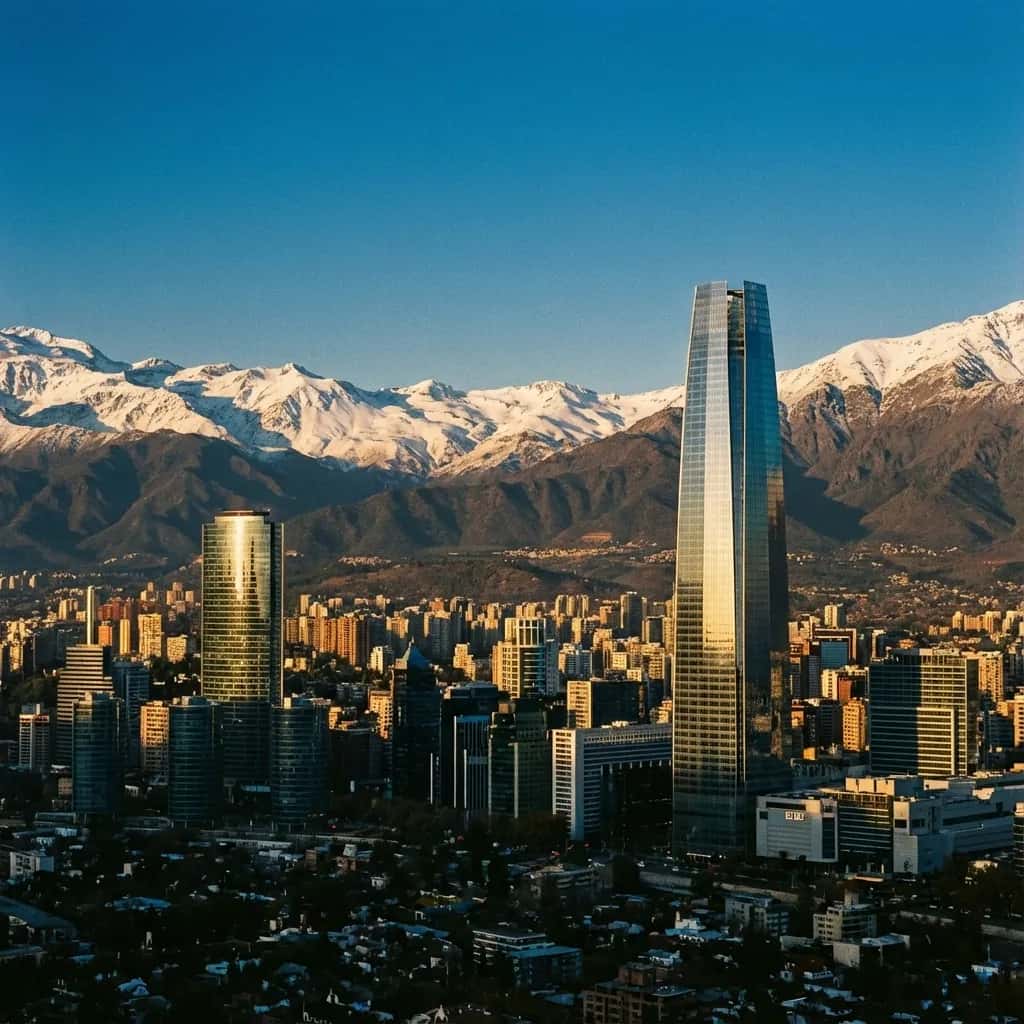
About Santiago
Santiago is the capital and economic center of Chile. With its many museums, events, theaters, restaurants, bars and other entertainment and cultural opportunities, it is also the cultural center of the country. For visitors it's both the gateway to the country and a destination in its own right with an eclectic architecture, a vibrant culinary and cultural scene, surrounded by the mighty Andes welcoming skiers, trekkers and friends of wine. Its central location in the country makes it a great base for visiting other areas, and it is possible to ski in the nearby Andes and later be on the beach in the same day.
Source: Wikipedia
Essential Information
Currency
Chilean peso (CLP)
Symbol: $
Language
Spanish
Phone Code
+56
International dialing code for Chile
Driving
Drive on the right
Standard for Chile
Region
Americas
South America
Connectivity
If you wish to mail a letter or postcard, the largest post office is the Correo Central on the north side of Plaza de Armas, a Neoclassical building with French influences. There are several smaller post offices around the city, often close to the larger avenues.
How to Get to Santiago
Transportation options and arrival information
Upon entry, all tourists are issued a tourist card good for 90 days. Take care not to lose the stamped tourist card as it is required to exit the country. If you happen to lose it you must get it reissued by the PDI (Policía de Investigaciones) before attempting to leave the country.
Getting Around Santiago
Local transportation and navigation tips
Transantiago[dead link]runs the metro and main bus lines in the city. Fares on public transport can be paid only with a bip! card. Bip! cards can be bought and recharged at any metro station (1,550 pesosfor the card, minimum recharge1,000 pesos) or at aCentro bip!. They are good for both the metro and bus and allows you unlimited transfers between the two within a two hour period — you still have to swipe your card when boarding the next metro train or bus, but there is in general no deduction.
Safety in Santiago
High Safety (Global Peace Index: 1.84)
About the Global Peace Index: Global Peace Index measures peacefulness on a scale of 1 (most peaceful) to 5 (least peaceful)
Santiago is infamous for itssmog, which is worse during the winter (May–September). The locals welcome the rain which falls during winters as it cleans the air. Be sure to carry bottled water with you during the summer. Be prepared for sauna-heat on the metro during summer.
Where to Stay in Santiago
Accommodation tips and recommendations
All types of accommodation, from top class hotels to backpacker hostels are available. As a general rule, lodging gets more luxurious and expensive the further east you travel.
UNESCO World Heritage Sites
1 protected sites near Santiago

Things to See in Santiago
18 landmarks and points of interest
Balmaceda Park
Urban park in Providencia, Santiago, Chile
Bustamante Park
urban park in Providencia, Santiago de Chile
Campos de Sports de Ñuñoa
former stadium in Santiago, Chile
Estadio Independencia
Stadium located in Santiago, Chile between 1945 and 1971
Estadio Municipal Sin Iluminacion
stadium
Estadio Santiago Bueras
multi-use stadium in Maipu, Chile
Estadio Usach
Iglesia de San Agustín
Historic colonial church in Santiago of Chile
Iglesia de la Divina Providencia
national monument of Chile
Iglesia de las Agustinas, Santiago de Chile
Santiago de Chile
Julio Martínez Prádanos National Stadium
stadium in Santiago, Chile
Parque Araucano
park in Chile
Source: Wikidata
Ready to Explore Santiago?
Find the perfect time to visit and discover all that Santiago has to offer.