
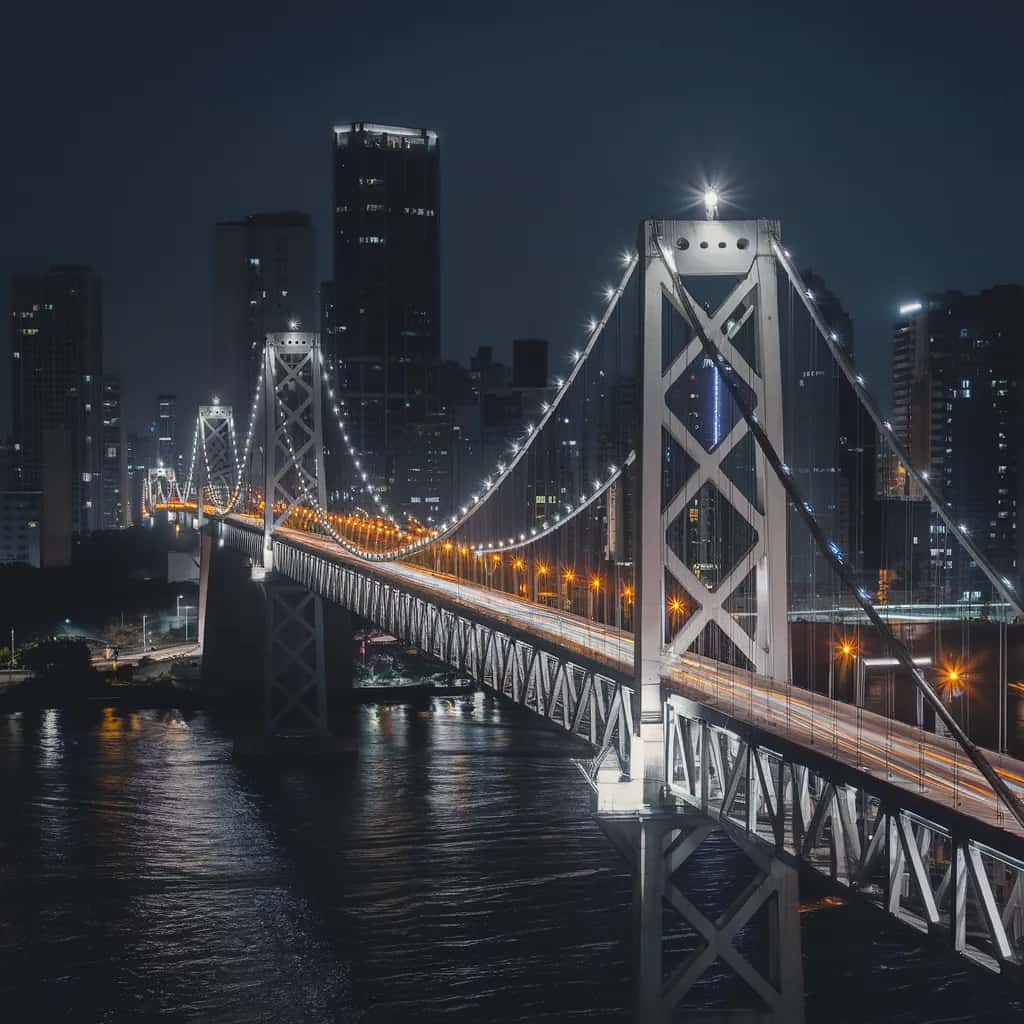
About Sao Paulo
São Paulo, or Sampa as it is also called, is the largest city in Brazil, with a municipality population of 12.1 million, and about 21.3 million in its metropolitan region - the most populous of the Americas and the Southern Hemisphere. It is the capital of the Southeastern state of São Paulo, and also a beehive of activity that offers a jovial nightlife and an intense cultural experience. São Paulo is South America's major economic center and possesses the 10th largest GDP in the world, though poverty, especially in the suburbs, is still widespread due to the blatant social inequality. Historically attractive to immigrants and to Brazilians from other states, it has a unique cultural identity formed by combining Portuguese and African roots (common to the entire country) with other influences, in particular Italian, Arab and Japanese. São Paulo is probably one of the most underrated cities tourism-wise, often overshadowed by other places in the Brazilian sun & beach circuit such as Rio
Source: Wikipedia
Essential Information
Currency
Brazilian real (BRL)
Symbol: R$
Language
Portuguese
Phone Code
+55
International dialing code for Brazil
Driving
Drive on the right
Standard for Brazil
Region
Americas
South America
How to Get to Sao Paulo
Transportation options and arrival information
São Paulo (SAOIATA) has three major airports: Guarulhos International (GRUIATA) and Viracopos (VCPIATA) for international and some domestic arrivals, and Congonhas (CGHIATA) for most medium and short haul domestic flights.
Getting Around Sao Paulo
Local transportation and navigation tips
Transport in São Paulo can be anything from joyful to complicated. Usually, the fastest and less stressful way to get around is by bicycle and public transportation, while the experience with cars can be hellish. Peak hours are normally roughly 06:00-09:00 and 16:00-19:00, but since city roads are constantly at maximum capacity, any little incident can cause major queues and delays. The cheapest way for tourists to get around is to use the subway/metro, trains and buses/trolleybuses as much as p
Safety in Sao Paulo
Moderate Safety (Global Peace Index: 2.465)
About the Global Peace Index: Global Peace Index measures peacefulness on a scale of 1 (most peaceful) to 5 (least peaceful)
São Paulo, once one of the most violent cities of Brazil, has managed to drastically reduce crime during the 2000s. According to the Sangari Institute, São Paulo was thesafest capital city of Brazilin 2011, in terms of homicide rate.
Where to Stay in Sao Paulo
Accommodation tips and recommendations
If you plan to explore the city and cannot rely on car/taxi, staying near a Metro or train station is a very wise choice. Just be sure to avoid degraded areas. For lists of recommended hotels in the city, see the individual District listings. If you wish to stay close to the airport, please see the article onGuarulhos.
Things to See in Sao Paulo
20 landmarks and points of interest
Basilica of the Most Blessed Sacrament, São Paulo
church building in São Paulo, Brazil
Basílica José de Anchieta
church building in São Paulo, Brazil
Capela de Santa Cruz
church in São Paulo, Brazil
Centro Cultural Banco do Brasil
cultural center in São Paulo, Brazil
Estádio do Pacaembu
football stadium in Brazil
Estádio Ícaro de Castro Melo
football stadium in Brazil
Igreja Nossa Senhora do Brasil
church building in São Paulo, Brazil
Igreja das Chagas do Seráfico Pai São Francisco
church building in São Paulo
Igreja de Santo Antônio
church building in São Paulo, Brazil
Immigration Museum of the State of São Paulo
museum
Jardim da Luz
Park in São Paulo
Latin America Memorial
cultural complex in São Paulo, Brazil
Source: Wikidata
Ready to Explore Sao Paulo?
Find the perfect time to visit and discover all that Sao Paulo has to offer.