
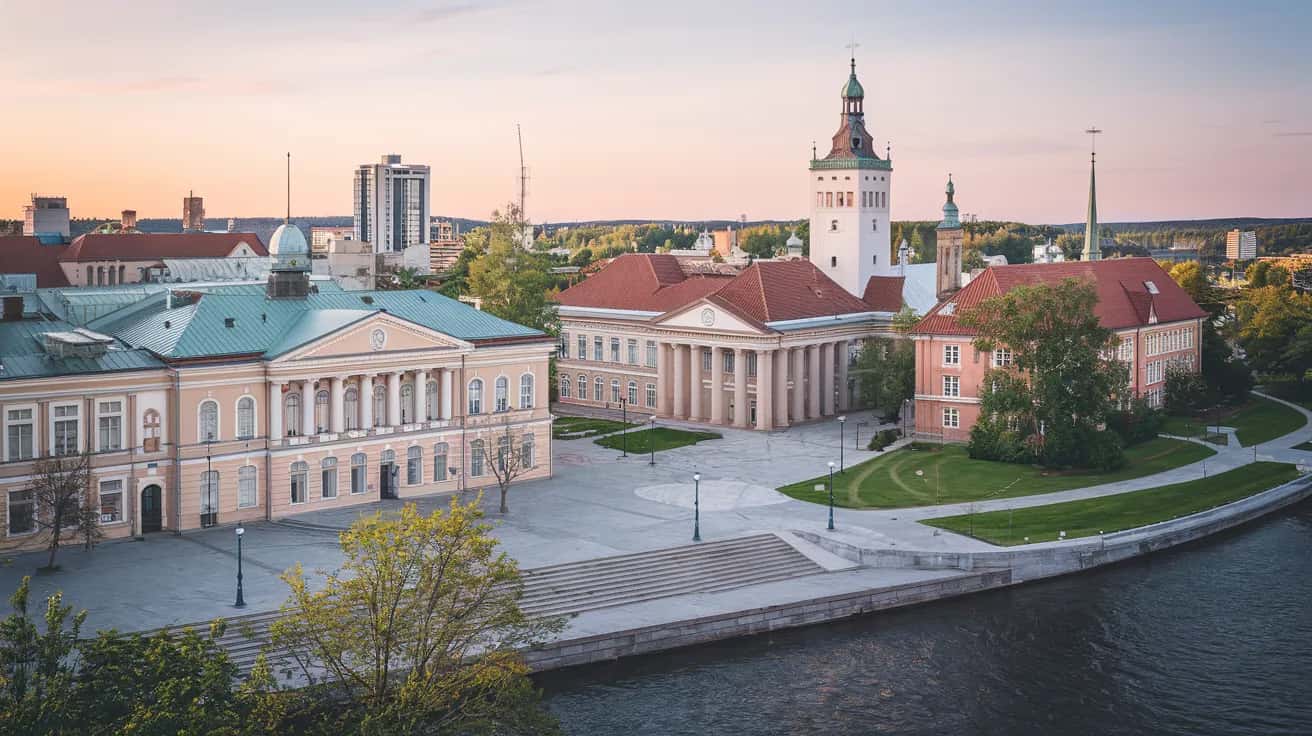
About Tartu
Tartu (formerly known as Dorpat or Yuryev) is the second largest city in Estonia with a population of around 98,000 (2024). A Hanseatic city and a university town, it's dating back to 1030, and as such it's the oldest city in the Baltics.
Source: Wikipedia
Essential Information
Currency
Euro (EUR)
Symbol: €
Language
Estonian
Phone Code
+372
International dialing code for Estonia
Driving
Drive on the right
Standard for Estonia
Region
Europe
Northern Europe
Getting Around Tartu
Local transportation and navigation tips
Tartu can be easily explored by walking. It's only a 20-minute walk from the train station to the old town, and a beautiful 30-min walk from old town to the Estonian National Museum. Walking up to Toomemägi for views of the city and attractions like the old observatory and the cathedral ruins is also definitely worth it.
Safety in Tartu
High Safety (Global Peace Index: 1.662)
About the Global Peace Index: Global Peace Index measures peacefulness on a scale of 1 (most peaceful) to 5 (least peaceful)
In emergencies,☏112 (free from all phones). This includes social services, although for non-urgent matters you could contact the social services directly.
Things to See in Tartu
15 landmarks and points of interest
Barclay Square
square in Tartu, Estonia
Immaculate Conception Church
church in Tartu, Estonia
Saint Peter's Church
church building in Tartu, Estonia
St. George's Church
church in Tartu, Estonia
St. Mary's Church
church building in Tartu, Estonia
St. Paul’s Church
church building in Tartu, Estonia
Stadium of Tartu University
multi-purpose stadium in Tartu, Estonia
Tartu Art Museum
art museum in Tartu, Estonia
Tartu Synagogue
synagogue in Tartu, Estonia
Toomemägi
hill in Tartu, Estonia
Town Hall Square
square in Tartu, Estonia
University of Tartu Art Museum
art museum in Tartu, Estonia
Source: Wikidata
Ready to Explore Tartu?
Find the perfect time to visit and discover all that Tartu has to offer.