
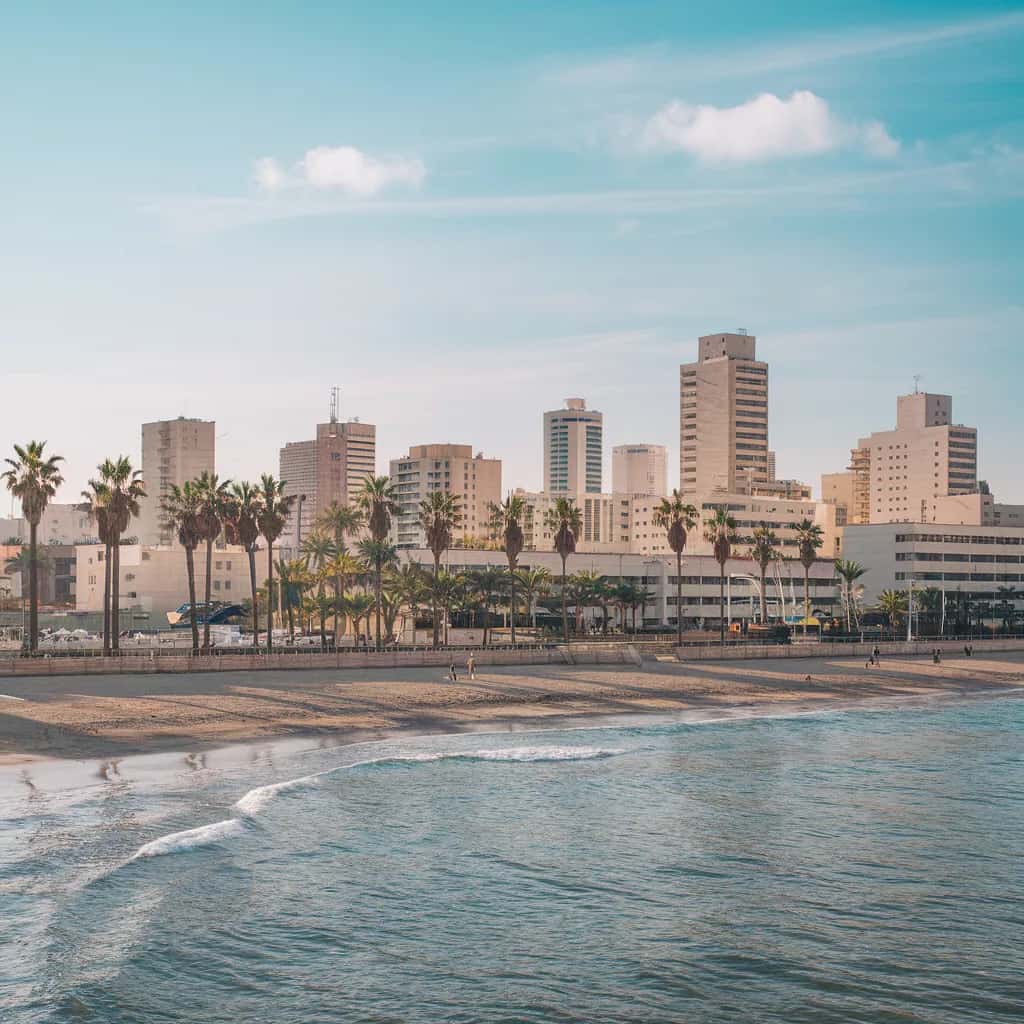
About Tel Aviv
Tel Aviv (Hebrew: תל אביב, Arabic: تل أبيب) is the second largest city in Israel (after Jerusalem), and the largest metropolitan area. It is on the Mediterranean coast, about 60 km northwest of Jerusalem and 100 km south of Haifa. The official name is Tel Aviv-Yafo (תל אביב-יפו), and reflects the fact that the city has grown beside (and absorbed) the ancient port city of Yafo (English: Jaffa, Arabic: يافا Yafa), to the south of the new city center. Tel Aviv is home to most embassies in Israel. In Israel, Tel Aviv is known for being a liberal city, in contrast to conservative Jerusalem. It has a thriving LGBT scene, and the general social norms are similar to major American and Western European cities.
Source: Wikipedia
Essential Information
Currency
Israeli new shekel (ILS)
Symbol: ₪
Language
Arabic
Also: Hebrew
Phone Code
+972
International dialing code for Israel
Driving
Drive on the right
Standard for Israel
Region
Asia
Western Asia
How to Get to Tel Aviv
Transportation options and arrival information
Tel Aviv's (and Israel's) main entry point from abroad is32.00046134.8705311Ben Gurion International AirportTLVIATA(referred to by its Hebrew initialsNatbagby locals). You can arrive to the city center by train, taxi, or by hired car (it's a 20-min drive followed by a very long search for parking). There is no sherut taxi to Tel Aviv from Ben Gurion, although traveling by bus is possible.
Getting Around Tel Aviv
Local transportation and navigation tips
Tel Aviv has a modern, regular, cheap and widespread bus network run mostly byDan[dead link]. The main bus lines start at 05:00 AM and stops at 1 AM; on Thursday nights, Saturday nights, and during all July and August, the main lines run all night. Between November and March, the bus service stops on Friday at 15:00 and resumes on Saturday at 18:00, and between April and October the service stops on Friday at 17:00 and resumes on Saturday at 21:00.
Safety in Tel Aviv
Low Safety (Global Peace Index: 2.576)
About the Global Peace Index: Global Peace Index measures peacefulness on a scale of 1 (most peaceful) to 5 (least peaceful)
In general, most tourist areas are completely safe for tourists even at night. However, try to avoid the Central Bus Station, especially at night. This bus station is a large building with many abandoned parts that brings with it many dodgy people. Instead, try to take a bus that arrives at "Terminal 2000" or outside the Azrieli Towers. The "HaHagana" train station is safe, but avoid walking around the nearby Neve Shaanan neighborhood at night (the area east of "Ha'Aliya" and "Menachem Begin" st
Where to Stay in Tel Aviv
Accommodation tips and recommendations
Tel Aviv has a wide variety of accommodation options, from camping and backpacker hostels, boutique hotels, right up to luxury 5-star hotels. The main area for a short term stay is in thecenterwith a big hotels strip on the beach and many accommodation options all around. The center should be your default place to stay. Some places can also be found in thesouthand will usually be cheaper (except the David Intercontinental).
UNESCO World Heritage Sites
5 protected sites near Tel Aviv



Things to See in Tel Aviv
20 landmarks and points of interest
Abattoir Hill
archaeological site in Israel
Bat Yam Municipal Stadium
football stadium in the Tel Aviv District, Israel
Charles Clore Park
park in Tel Aviv, Israel
Cymbalista Synagogue and Jewish Heritage Center
synagogue of Tel Aviv University
Dubnow Park
public park and garden in Tel Aviv, Israel
Gaon Stadium
former football stadium in Tel Aviv, Israel
Givatayim Theater
theater and center for the arts in Givatayim, Israel
Great Synagogue
synagogue in Tel Aviv, Israel
Habima Square
public plaza in Tel Aviv
Hechal Yehuda Synagogue
synagogue in Tel Aviv, Israel
Herzliya Municipal Stadium
football stadium in Herzliya
London Square
public space in the center of Tel Aviv
Source: Wikidata
Ready to Explore Tel Aviv?
Find the perfect time to visit and discover all that Tel Aviv has to offer.