
About Manila
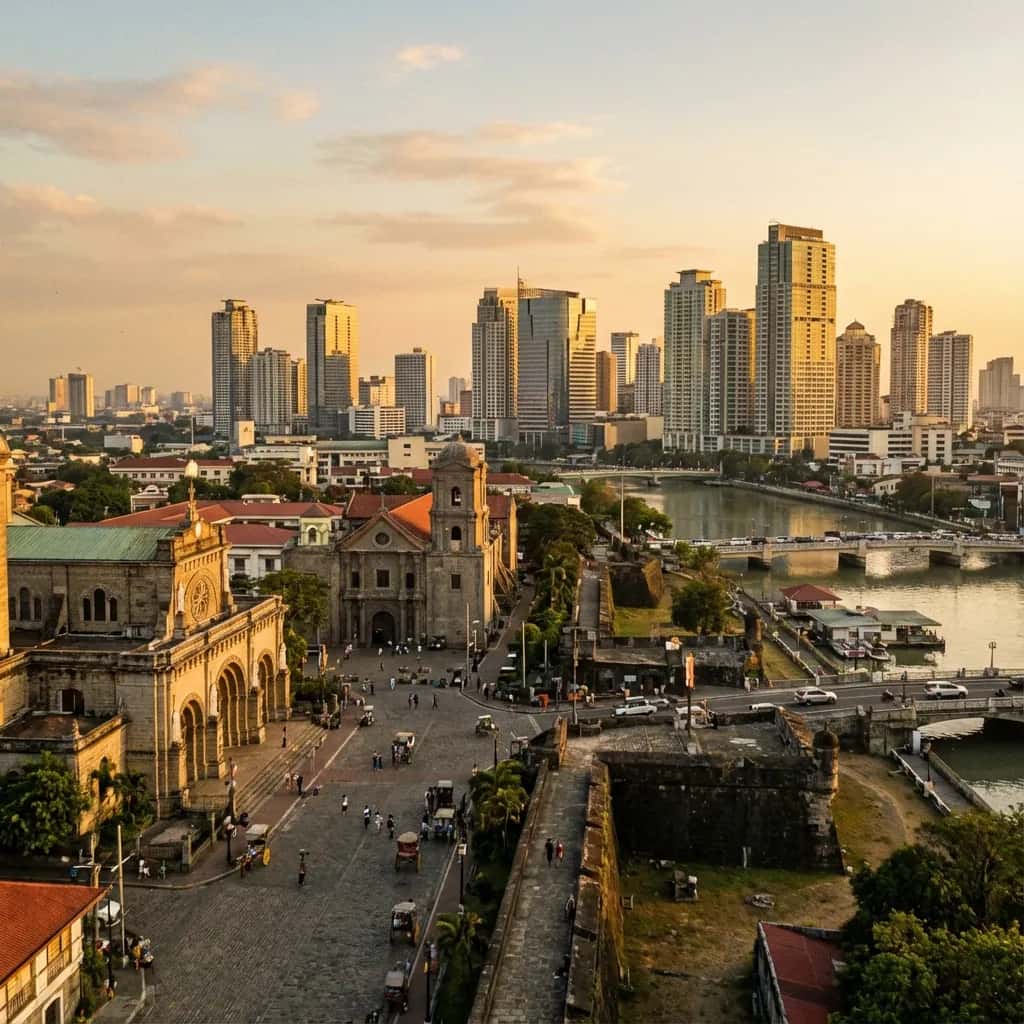
Manila (Tagalog: Maynila) is the capital of the Philippines and a major attraction in terms of culture and heritage in the country. Sprawling, congested and polluted will likely be the first words to enter your mind when you think of Manila but don't let that impression stop you from exploring its places of interests: its churches; its diverse and complicated culture; colonial history; gigantic malls; bustling markets; hidden architectural gems and vibrant nightlife. Take the opportunity to explore Manila and make your own personal connection with the city. Manila is part of the huge Metro Manila metropolis which has many attractions beyond those in Manila's administrative boundaries. This article covers only the city proper.
Source: Wikipedia
Essential Information
Currency
Philippine peso (PHP)
Symbol: ₱
Language
English
Also: Filipino
Phone Code
+63
International dialing code for Philippines
Driving
Drive on the right
Standard for Philippines
Region
Asia
South-Eastern Asia
Connectivity
Payphones are very common in the city center. The use of mobile phones is also very extensive. To use your mobile phone, it has to be at least a dualband GSM phone. Globe and Smart are the Philippine's largest mobile carriers and they invite you to use them as a roaming partner (inquire from your home carrier if they have Globe and Smart as a roaming partner).
How to Get to Manila
Transportation options and arrival information
For more information check thesection on airportsin the Metro Manila article.
Getting Around Manila
Local transportation and navigation tips
Manila is served byLRT Line 1(green line), operated by Light Rail Manila Corporation, andLRT Line 2(blue line), operated by the Light Rail Transit Authority. Line 1 uses light-rail type rolling stock and servesMalate,Ermita,Quiapo,BinondoandSanta Cruz. Line 2 uses longer commuter-grade rolling stock and serves Quiapo,Sampalocand Santa Mesa.
Safety in Manila
Moderate Safety (Global Peace Index: 2.339)
About the Global Peace Index: Global Peace Index measures peacefulness on a scale of 1 (most peaceful) to 5 (least peaceful)
Despite a reputation for crimes and congestion, Manila is relatively safe if you follow basic precautions. Touristy areas are well patrolled by police or private security, and most trips are done by public transport. Driving is surely the worse way to get around if you do not know large city driving.
Where to Stay in Manila
Accommodation tips and recommendations
Check for hotel listings in the appropriatedistricts
Things to See in Manila
19 landmarks and points of interest
Casa Manila
history museum
Iglesia ni Cristo chapel, Punta
church in Manila, Philippines
Manila Metropolitan Theatre
theater in Manila, Philippines
Marikina River Park
natural park in Metro Manila for recreation
Museo de Intramuros
ecclesiastical museum
PhilSports Football and Athletics Stadium
Philippines stadium
Plaza Olivia Salamanca
public square in Ermita, Manila, Philippines
Plaza de Roma
major public square in Intramuros, Manila
Quezon Memorial Circle
national park in Quezon City, Philippines containing the Quezon Memorial Shrine
Shrine of St. Therese, Doctor of the Church
church in Metro Manila, Philippines
St. Francis Square
square in Bratislava, Slovakia
Tanghalang Pambansa
theatre in Pasay, Metro Manila, Philippines, part of Cultural Center of the Phliippines
Source: Wikidata
Ready to Explore Manila?
Find the perfect time to visit and discover all that Manila has to offer.