
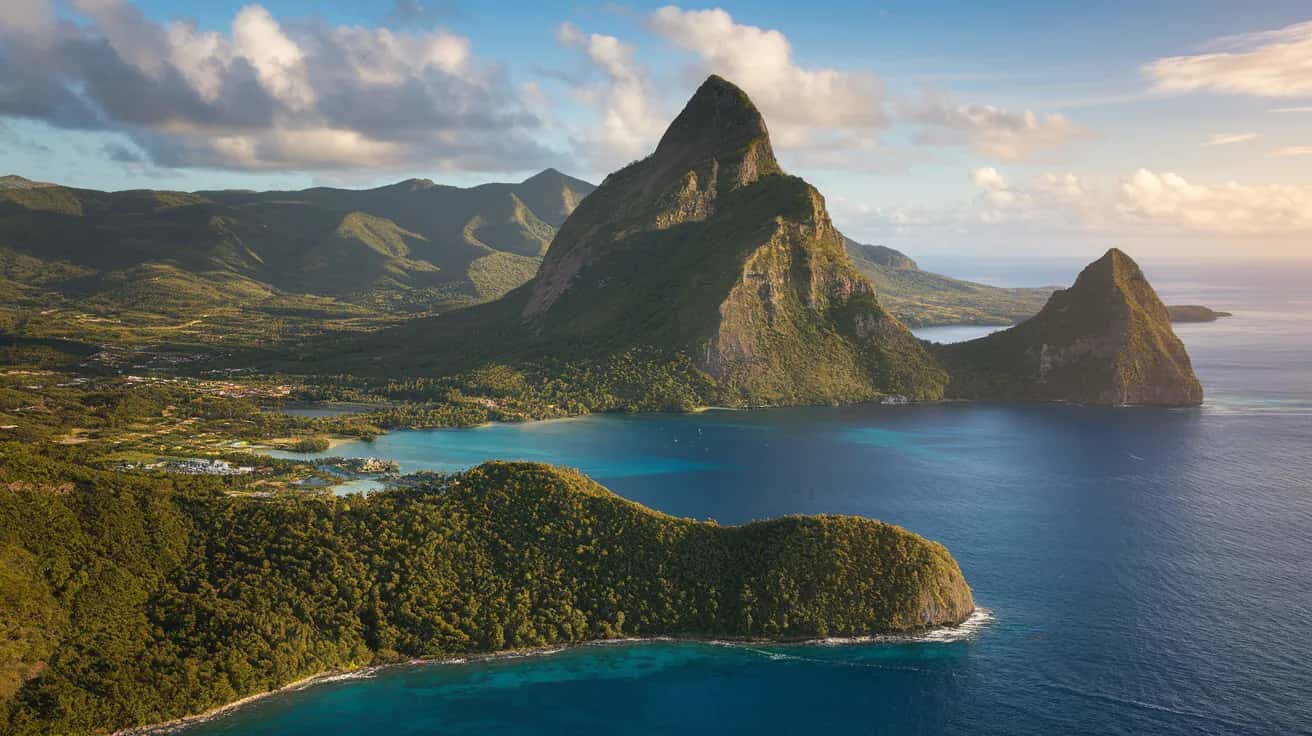
About St. Lucia
Saint Lucia is an island nation in the Caribbean. Saint Lucia is a popular destination due to its tropical weather, lush and mountainous scenery, numerous beaches, local accommodations, and range of resorts. St. Lucia has become a significant wedding destination. Other tourist attractions include a drive-in volcano and sulphur springs, the Botanical Gardens, the Majestic twin Peaks "The Pitons"--a world heritage site, Edmund Rainforest, the Tourille Waterfall (almost a drive-ion waterfall), Sapphire Jungle Spa, extensive reef for diving and snorkelling (all in Soufrière), and Pigeon Island National Park, which is home to Fort Rodney, an old British military base. The twin Pitons (Gros Piton and Petit Piton) are striking cone-shaped peaks south of Soufriere that are one of the scenic natural highlights of the Caribbean.
Source: Wikipedia
Essential Information
Currency
Eastern Caribbean dollar (XCD)
Symbol: $
Language
English
Phone Code
+1758
International dialing code for Saint Lucia
Driving
Drive on the left
Standard for Saint Lucia
Region
Americas
Caribbean
How to Get to St. Lucia
Transportation options and arrival information
Citizens of the following countries do not need visas: Andorra, Antigua and Barbuda, Argentina, Austria, Bahamas, Barbados, Beglium, Belize, Bosnia and Herzegovina, Botswana, Brazil, Brunei, Bulgaria, Canada, Chile, Cuba, Cyprus, Czech Republic, Denmark (includes Faroe Islands and Greenland), Dominica, Estonia, Eswatini, Fiji, Finland, France, Georgia, Germany, Greece, Grenada, Hungary, Iceland, Ireland, Israel, Italy, Jamaica, Japan, Kiribati, South Korea, Kuwait, Latvia, Lesotho, Liechtenstein
Getting Around St. Lucia
Local transportation and navigation tips
The main way for tourists to get around Saint Lucia is by taxi, either arranged by the hotel, taxi agency or individual operators. The tours arranged by resorts are usually the most expensive way to travel but might offer food and drink. Using a local taxi operator to plan your own adventure will be much more affordable. Your hotel staff should provide you with a number of a taxi agency or operator that they use regularly. The prices are generally fixed but you can shop around to get the best ra
Safety in St. Lucia
St Lucia is not an incredibly dangerous place, but rates of homicide, rape, and mugging have increased drastically over the past several years. You should exercise the same caution as you would at home. You should also try to stay in groups and be careful in any secluded area. Muggings at gunpoint while you are in the water have become increasingly popular criminal activities, so make sure to hide your valuables. Pickpockets are in every country - just be careful in crowded areas.
Where to Stay in St. Lucia
Accommodation tips and recommendations
Saint Lucia is home to a huge number of resort hotels as well as small boutique hotels and self-catering villas, condos, and vacation apartments.
UNESCO World Heritage Sites
2 protected sites near St. Lucia


Volcanoes and Forests of Mount Pelée and the Pitons of Northern Martinique
Group of protected areas in France
Things to See in St. Lucia
2 landmarks and points of interest
Derek Walcott Square
public square and park in Castries, Saint Lucia
Sulfur Springs
geothermal field on the island of Saint Lucia
Source: Wikidata
Ready to Explore St. Lucia?
Find the perfect time to visit and discover all that St. Lucia has to offer.