
Peak in August
Coolest in December
Heavy in February
Peak in dry season
Sea Temperature
Atlantic Ocean(Atlantshafið)
Annual Average
Consider a wetsuit for extended swimming
Based on average sea surface temperature
Atlantshafið
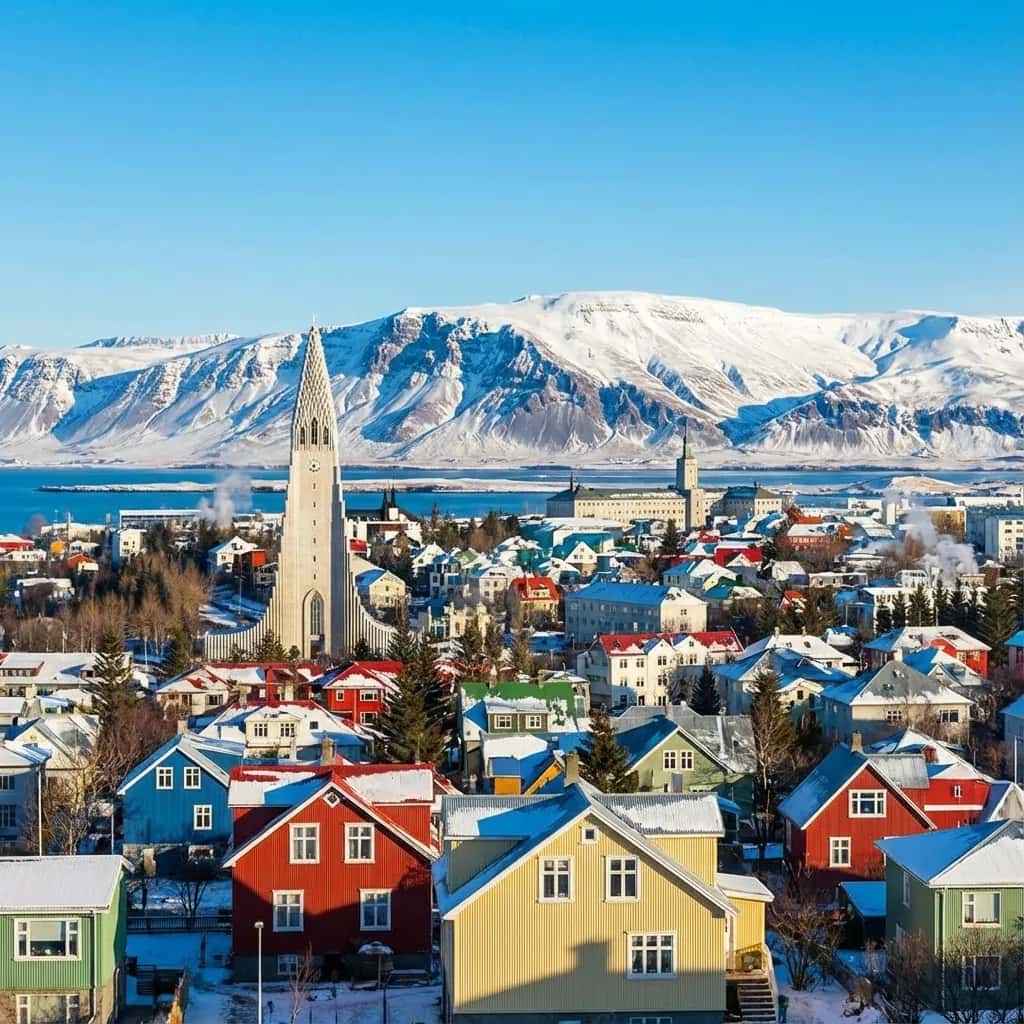
Reykjavik coastline
Reykjavik Monthly Weather Guide
Click any month to explore daily weather forecasts


Essential Travel Info for Reykjavik
Currency
ISK
kr Icelandic króna
Language
Icelandic
Driving
Right side
Safety
Very High Safety
GPI: 1.107
Best Time to Visit Reykjavik
Location, climate overview & historical trends
Tap to Explore Map
📍 64.1466° N, 21.9426° W
Open in Google MapsReykjavik is a prominent destination in Iceland.
Located at 64.15°N latitude,Reykjavik experiences a subarctic climate with cold winters and mild summers.
Based on 30 years of data, August is the warmest month (avg. 14°C), while December is the coolest. February sees the most rain (47% chance), making July the driest month.
Historical Climate Trend
30-Year Analysis+0.87°C
Total over 30 years
+0.29°C
Per decade
Linear regression analysis of historical maximum temperatures for Reykjavik, based on 1995-2024 satellite data from NASA POWER.
Best Time to Visit
NASA POWER Data (1991-2021)Dry Season
Best months to visit
7°C
Avg High
Based on 30 years of NASA satellite data,Reykjavik receives approximately 1,034mm of rainfall annually. These months offer optimal temperatures and minimal rain probability for your visit.
Climate Trends
EXCLUSIVE1995-2040 Temperature Trend
1995 Avg
6.3°
2024 Avg
7.2°
2040 Proj
7.6°
+0.29°C
per decade (observed)
+0.25°C
per decade (CMIP6)
🌡️ Reykjavik has warmed by +0.9°C since 1995. By 2040, an additional +0.4°C is projected (based on CMIP6 rate of 0.246°C/decade), for a total of +1.3°C from 1995 baseline.
NASA POWER (1995-2024) + CMIP6 (CMCC_CM2_VHR4, EC_Earth3P_HR, FGOALS_f3_H, HiRAM_SIT_HR, MRI_AGCM3_2_S, NICAM16_8S)
Travel Intelligence
Exclusive flight analytics & health data for Reykjavik
Smart Flight Estimator
Airport-to-Airport Logistics
unlock smart flight estimates
Add your home location in settings to see airport details.
Flight Connectivity Analysis
Airport traffic data & seasonal patterns
Balanced traffic
0
slots per day
Peak
Jul
Low
Sep
Monthly Traffic Distribution
Key Connections
Health & Safety Advisory
CDC travel health recommendations
COVID-19
All eligible travelers should be up to date with their COVID-19 vaccines. Please seeYour COVID-19 Vaccinationfor more information.
Hepatitis A
Consider hepatitis A vaccination for most travelers. It is recommended for travelers who will be doing higher risk activities, such as visiting smaller cities, villages, or rural areas where a traveler might get infected through food or water. It is recommended for travelers who plan on eating street food.
Hepatitis B
Recommended for unvaccinated travelers of all ages traveling to Iceland.
Measles
Cases of measles are on the rise worldwide. Travelers are at risk of measles if they have not been fully vaccinated at least two weeks prior to departure, or have not had measles in the past, and travel internationally to areas where measles is spreading.All international travelers should be fully vaccinated against measles with the measles-mumps-rubella (MMR) vaccine, including an early dose for infants 6–11 months, according toCDC’s measles vaccination recommendations for international travel.
Rabies
Dogs infected with rabies are not commonly found in Iceland.If rabies exposures occur while in Iceland, rabies vaccines are typically available throughout most of the country.Rabies pre-exposure vaccination considerations include whether travelers 1) will be performing occupational or recreational activities that increase risk for exposure to potentially rabid animals and 2) might have difficulty getting prompt access to safe post-exposure prophylaxis.Please consult with a healthcare provider to determine whether you should receive pre-exposure vaccination before travel.For more information, seecountry rabies status assessments.
Yellow Fever
CDC recommendations:Vaccine isnotrecommended.Country entry requirements:Vaccine isnotrequired.Updated April 23, 2025
Source: CDC Travelers' Health
View Complete Health GuideReykjavik Climate Data by Month
Historical temperature and precipitation averages
| Month | Avg High (°C) | Rain Probability (%) | Status |
|---|---|---|---|
| January | 1°C | 45% | ❄️ Cold |
| February | 2°C | 47% | ❄️ Cold |
| March | 3°C | 40% | ❄️ Cold |
| April | 6°C | 39% | Neutral |
| May | 10°C | 39% | Neutral |
| June | 12°C | 32% | Neutral |
| July | 14°C | 32% | Neutral |
| August | 14°C | 35% | Neutral |
| September | 11°C | 46% | 🌧️ Rainy |
| October | 6°C | 41% | 🌧️ Rainy |
| November | 3°C | 36% | ❄️ Cold |
| December | 1°C | 41% | ❄️ Cold |
Reykjavik Weather FAQ
When is the best time to visit Reykjavik?
Honestly, look for months with mild temperatures (20°C-25°C) and low rain chance. Based on historical data, summer months are usually great choices.
When is the hottest month in Reykjavik?
August is historically the hottest month in Reykjavik with average highs of 14°C.
When does it rain the most in Reykjavik?
February typically sees the highest probability of rain (47%).
Is Reykjavik expensive?
Prices vary by season. The "Perfect" weather months usually coincide with peak tourist season and higher prices, while the rainy or cold months offer better deals.